
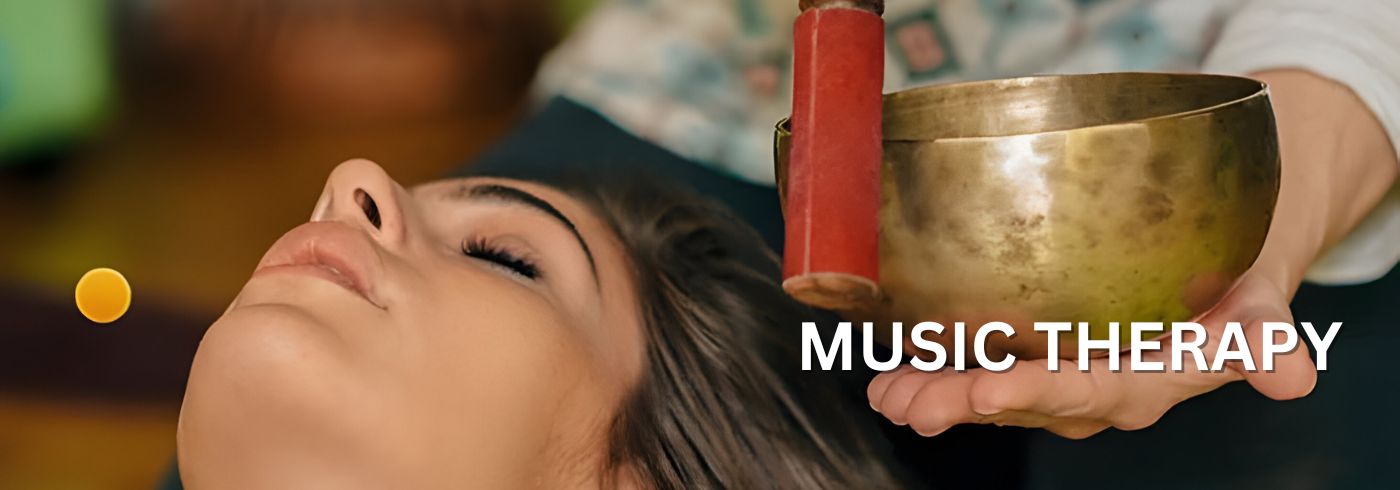
Music therapy uses the power of music to address emotional, cognitive, and physical needs, promoting overall well-being.
Benefits Of Music Therapy

Reduces stress and anxiety
Enhances mood and emotional expression
Improves focus and cognitive function
Book Your Appointment For Music Therapy
It will take only two minutes to book an appointment. Just click on Book An Appointment button given below.
Frequently Asked Questions
What is music therapy called?
Neurologic music therapy NMT is a model of music therapy that is based on neuroscience, specifically the perception and production of music and its influence on the function of the brain and behaviors.
What are the four methods of music therapy?
Four Methods of Music Therapy For Your Clients
- Compositional music therapy.
- Improvisation music therapy.
- Receptive music therapy.
- Re-creative music therapy.
How does music help mental health?
Music can be distracting and lower your stress. In fact, research has shown that it can lessen the impact of depression and anxiety. A study done in 2019 found that college students who listened to classical music every day for two months lowered their levels of anxiety significantly.
What are the 2 types of music therapy?
Music-based therapy is based on two fundamental methods – the ‘receptive’ listening based method, and the ‘active’ method based on playing musical instruments (Guetin et al., 2009).
What are the 5 domains of music therapy?
While the needs of our clients’ vary, the goals that music therapists work on are generally broken down into five domains: social, emotional, cognitive, communication, and physical.
Who started music therapy?
Thayer Gaston, known as the “father of music therapy,” was instrumental in moving the profession forward in terms of an organizational and educational point of view.
What are the steps of music therapy?
The therapist plays a song or piece of music to a patient and encourages the patient to talk about their feelings or the song’s meaning. The therapist may play an instrument or sing a song and encourage the patient to sing along or clap their hands in time with the music.
What are the side effects of music therapy?
Music therapy is generally very safe and has no side effects. But very loud music or particular types of music might irritate some people or make them feel uncomfortable. The music might trigger strong reactions or evoke memories which could range from pleasant to painful.
What happens in the brain during music therapy?
Research has shown that music activates cognitive, motor, and speech centers in the brain through accessing shared neural systems.
What type of music improves memory?
Other studies have found that classical music enhances memory retrieval, including Alzheimer’s and dementia patients. The thought is that the classical music helps fire off synapses, creating or re-energizing, brain pathways previously left dormant.